.png)


Mini Split Installation Near Me: What to Expect

When people search for mini split installation near me, they usually are not browsing for fun. They are dealing with a room that never gets comfortable, an older system that is costing too much to run, or a property that needs heating and cooling without tearing into walls for ductwork. In South Jersey, that often means sunrooms, additions, garages, older homes, small offices, and rental spaces where a ductless system makes a lot of sense.
A mini split can be one of the smartest HVAC upgrades you can make, but only if the system is sized correctly and installed the right way. Brand matters. Equipment quality matters. But the installation itself has just as much to do with how well that system performs next summer, next winter, and five years from now.
Why homeowners search for mini split installation near me
Most people start looking locally because they want answers fast. They want to know whether a mini split will solve the problem, how much disruption the install will cause, and whether the contractor will actually show up when promised.
That local part matters. A contractor working in Ocean County, Tabernacle, and nearby New Jersey communities understands the mix of hot, humid summers and cold winter stretches that puts real demand on a system. They also know the housing stock in the area. Installing a mini split in a newer bonus room is one thing. Installing one in an older home with limited wall space, electrical challenges, or insulation issues is another.
A nearby contractor also matters when service is needed later. Even the best equipment will eventually need maintenance, cleaning, or repair. It helps when the company that installed it is close enough to respond.
What a mini split installation actually includes
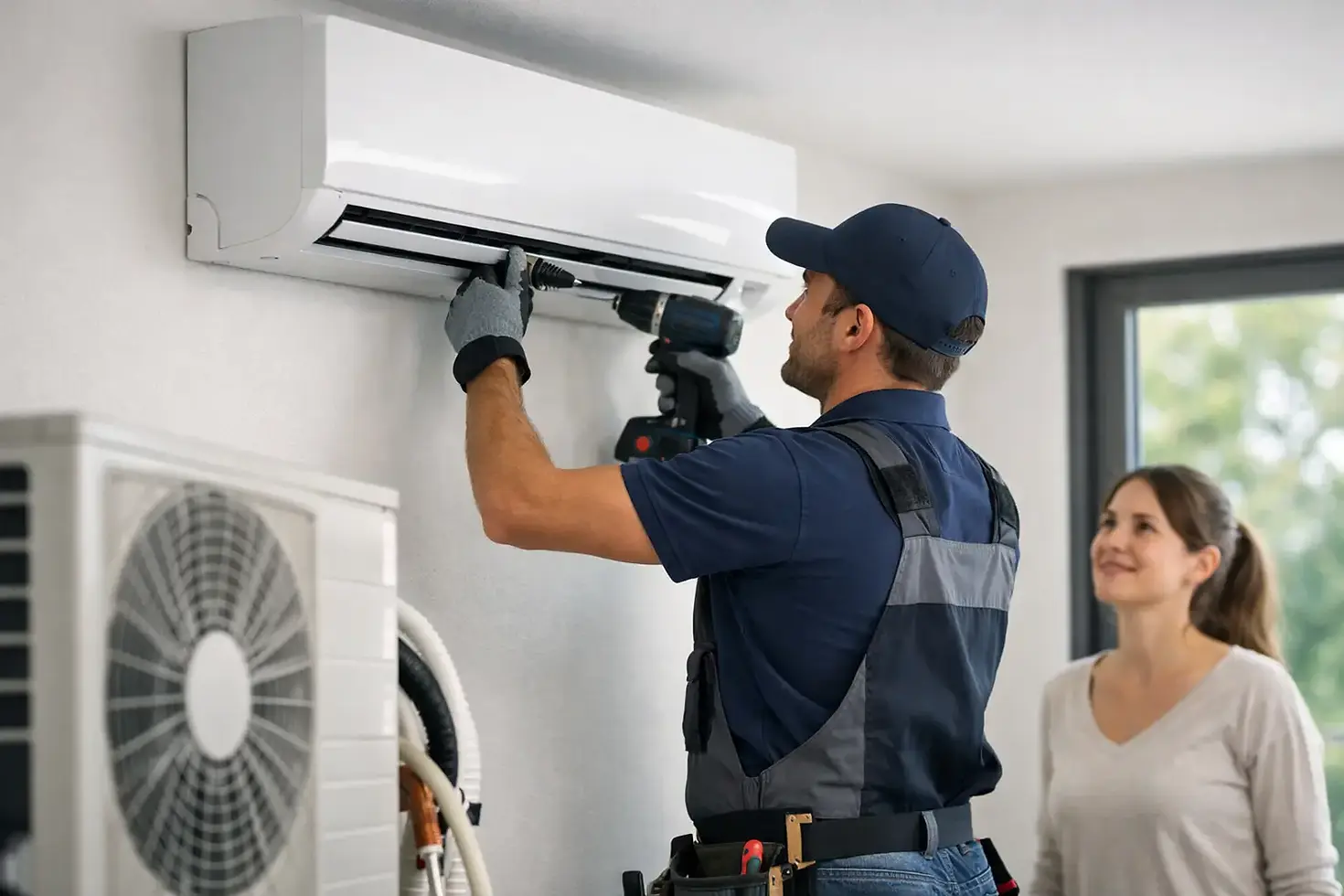
A lot of customers picture a quick wall unit install and nothing more. In reality, a proper mini split installation involves system design, placement, electrical considerations, condensate drainage, refrigerant line routing, startup testing, and performance checks.
The indoor unit has to go in a spot that delivers even airflow without creating drafts or blowing directly where people sit or sleep. The outdoor unit needs stable mounting, proper clearances, and enough protection from debris, snow, and foot traffic. Refrigerant lines need to be run cleanly and protected. Drainage has to be handled correctly so moisture leaves the system instead of turning into a leak problem inside the home.
Then there is sizing. Bigger is not always better. An oversized mini split can short cycle, leaving the space cool but clammy in summer. An undersized one may run constantly and still struggle on the hottest or coldest days. Good installation starts with matching the system to the space, not guessing.
Where mini splits make the most sense
Mini splits are a strong option when extending ductwork would be expensive, messy, or simply impractical. That is why they are common in additions, converted garages, finished basements, upstairs rooms, enclosed porches, workshops, and older homes without central duct systems.
They can also work well for light commercial spaces. A small office, retail area, server room, or specialty workspace may need independent temperature control without tying into a larger system. In those cases, a mini split can deliver efficient heating and cooling with less renovation.
Still, it depends on the layout and the goal. If the issue is poor airflow from an existing ducted system, a mini split may help in one trouble area, but it may not fix the root problem affecting the whole building. A good contractor should tell you that upfront.
What affects mini split installation cost near me
Cost is one of the first questions homeowners ask, and fairly so. The price of mini split installation depends on more than the equipment itself.
Single-zone systems usually cost less than multi-zone setups, but that does not automatically make them the better value. If you are trying to condition several rooms, a multi-zone system may be cleaner and more effective than piecing together separate units later.
The location of the indoor and outdoor units matters too. A short, straightforward line set run is different from a more complex install that requires longer routing, wall penetrations, condensate pumps, or special mounting. Electrical upgrades can also change the price. If the panel has limited capacity or the wiring path is difficult, the install becomes more involved.
Then there is the condition of the space itself. A well-insulated room with standard ceiling height is easier to plan for than a drafty addition with lots of glass and direct sun exposure. That room may need a different capacity than homeowners expect.
Low prices can look attractive online, but HVAC work is one area where shortcuts show up later. Poor drainage, sloppy line concealment, improper vacuum procedures, and bad system sizing can all lead to callbacks, comfort issues, and premature equipment problems.
How to choose the right installer
If you are comparing companies for mini split installation near me, look beyond the quote total. You want to know how they approach the job.
Ask whether they are licensed and experienced with ductless systems specifically. Ask whether they evaluate the room or building before recommending capacity. Ask how they plan to run the lines, where the condensate will drain, and whether they handle electrical coordination if needed. Those details tell you a lot about the quality of the work you can expect.
You also want a contractor who communicates clearly. If they are hard to reach before the job, that usually does not improve after the install. Homeowners and property managers need someone who shows up on time, explains the options plainly, and does not dodge questions about warranty, maintenance, or service support.
This is where a local, owner-led company often stands out. The work is personal. The reputation is local. And when the business has built itself on referrals, reviews, and repeat customers, there is more pressure to get the job done right the first time.
Questions to ask before installation day
Before you approve a proposal, make sure you understand what is being installed and what the job includes. Ask whether the price covers mounting hardware, line hide, refrigerant lines, electrical disconnects, condensate management, startup, and system testing. Not every quote is built the same way.
You should also ask about maintenance access. A mini split needs periodic cleaning and service, so the unit should not be placed somewhere that creates unnecessary headaches later. If the system is being installed in a rental property or commercial space, think about who will access and maintain it over time.
Noise is another good question. Mini splits are generally quiet, but placement still matters. A bedroom wall, a patio seating area, or a tight lot line may call for a different approach than a wide open side yard.
What installation day usually looks like
In most straightforward residential jobs, installation can be completed in a day. The crew mounts the indoor unit, sets the outdoor unit, runs the refrigerant and drain lines, completes electrical connections, pulls a vacuum, starts the system, and checks operation.
A more involved project can take longer, especially if there are multiple indoor heads, panel work, difficult routing, or wall and finish considerations. The best contractors will walk you through the plan ahead of time so there are no surprises.
The final walkthrough matters. You should be shown how to operate the remote or wall control, how to change modes, what routine cleaning looks like, and what signs might indicate a service issue later.
Why installation quality matters more than most people realize
Mini splits have a reputation for efficiency, and they earn it. But efficiency on paper is not the same as efficiency in the field. A poorly installed system can lose much of the performance people are paying for.
Refrigerant charge, line length, drainage, airflow, and electrical setup all affect day-to-day operation. So does placement. A unit installed in the wrong location may technically run fine while still leaving parts of the room uncomfortable.
That is why experience matters. A contractor with broad HVAC knowledge can look at the whole picture, not just the equipment box. Sometimes the right answer is a mini split. Sometimes the better answer includes insulation improvements, duct repair, zoning, or a different type of system altogether. Honest advice saves money.
For homeowners and small business owners in this area, that no-nonsense approach is what matters most. Companies like ComfortCare Heat & Air build trust by showing up, doing clean work, and recommending what fits the space instead of pushing what is easiest to sell.
If you are considering a ductless system, the best next step is simple. Get the space evaluated by a local pro who will give you a straight answer, a fair estimate, and an installation plan that makes sense for how you actually use the property.


Very informative post covering an important part of ductless HVAC. The step-by-step information gives readers a better understanding of what goes into mini split installation and why preparation matters before the equipment is put into operation.