.png)


What Does HVAC Service Include?

If your AC starts blowing warm air in July or your furnace makes a strange noise on a freezing New Jersey morning, the first question is usually simple: what does HVAC service include? Most people know they need to call when something feels off, but they do not always know what should happen once a technician arrives.
The short answer is that HVAC service usually includes inspection, testing, cleaning, adjustment, and diagnosis of your heating and cooling system. The exact scope depends on whether the visit is routine maintenance, a repair call, or service tied to a specific complaint. A good service call should give you a clear picture of system condition, safety concerns, and what needs attention now versus later.
What does HVAC service include on a typical visit?
For most homes and light commercial spaces, a standard HVAC service visit starts with a conversation. The technician asks what the system has been doing, when the issue started, whether airflow has changed, and if utility bills have been climbing. That part matters because symptoms often point to the right part of the system before any tools come out.
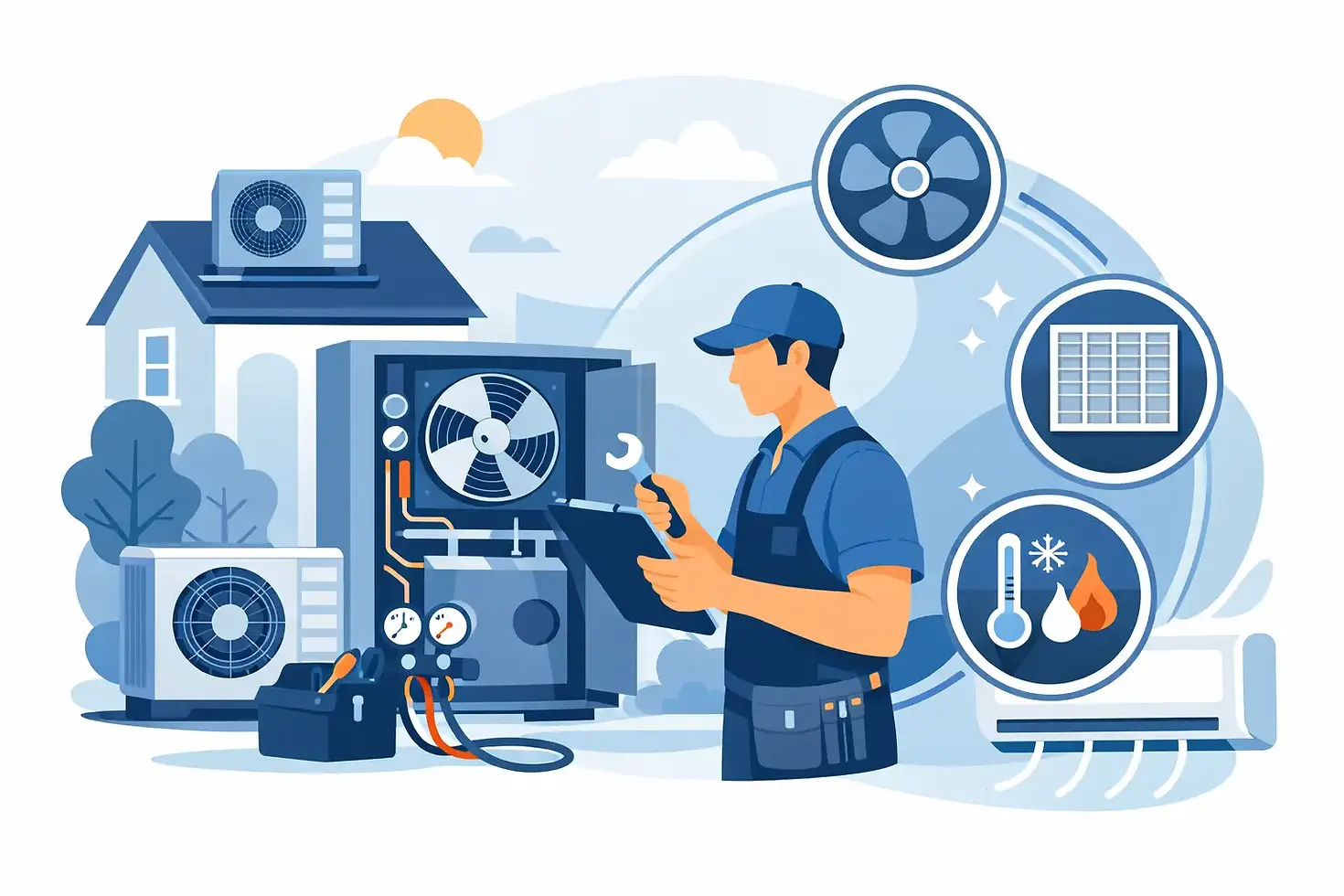
From there, the equipment gets inspected and tested. On an air conditioner or heat pump, that may include checking refrigerant pressures, measuring temperature split, inspecting capacitors and contactors, testing electrical connections, examining the condensate drain, and looking over the outdoor unit for coil buildup or damaged components. On a furnace or boiler, service often includes checking burners, heat exchangers, ignition components, safety controls, venting, gas pressure, and system performance.
A proper service visit also includes basic cleaning where needed. Dirt is one of the biggest reasons HVAC systems lose efficiency and break down early. Coils, drain lines, blower components, and filters often need attention. If the unit is accessible and the issue is minor, cleaning and adjustment may solve the problem on the spot.
Then comes the diagnosis. If a part has failed, a technician should explain what happened, what needs to be repaired, and whether the repair makes sense based on the age and condition of the system. Honest service is not just fixing what is broken. It is also telling you when a system is worth repairing and when replacement deserves serious consideration.
HVAC service is not always the same as maintenance
This is where a lot of homeowners get tripped up. When people ask what does HVAC service include, they are often talking about two different things.
Routine maintenance is preventive. It is scheduled before peak heating or cooling season to catch wear, clean the system, and improve performance. A repair service call is reactive. You call because the system is not cooling, not heating, short cycling, leaking, making noise, or not turning on at all.
Both are service, but the scope is different. Maintenance is broader and more preventive. Repair service is narrower at first because the priority is finding the immediate fault. If the technician is responding to an emergency no-cool call in the middle of summer, the visit may focus first on restoring operation, then addressing any larger maintenance issues once the home is comfortable again.
What technicians usually inspect during HVAC service
A thorough HVAC service visit covers more than the thermostat and the air coming out of the vents. Good technicians work through the system from controls to airflow to mechanical performance.
They typically check the thermostat to confirm proper communication and operation. They inspect filters because restricted airflow can cause a long list of problems, from frozen evaporator coils to overheating furnaces. Electrical components are tested because weak capacitors, loose wires, and worn contactors are common failure points.
Airflow is another major part of service. That includes looking at the blower motor, evaporator coil condition, duct issues, and vent restrictions. If certain rooms are uncomfortable, the problem may not be the equipment itself. It could be duct leakage, poor return air design, zoning problems, or blocked registers.
Drainage is also important, especially in cooling season. A clogged condensate line can shut a system down or cause water damage. On gas heat, combustion safety becomes a priority. The technician should inspect for safe operation, proper venting, and signs of cracked or deteriorated components.
For homes with heat pumps, ductless systems, boilers, water heaters, or indoor air quality add-ons, the checklist changes a bit. The equipment type always matters. That is why broad experience matters too. Not every contractor is equally comfortable working across heating, cooling, ventilation, and related mechanical systems.
What cleaning and tune-up work may be included
Some HVAC issues are not true breakdowns. They are performance problems caused by dirt, neglect, or minor wear. In those cases, service may include tune-up work that gets the system running better without a major repair.
That can include replacing or cleaning filters, flushing drain lines, cleaning condenser coils, tightening electrical connections, adjusting blower settings, lubricating motors where applicable, and calibrating controls. These are not flashy repairs, but they matter. A system that is clean and properly adjusted tends to run longer, cool or heat more evenly, and use less energy.
Still, there are limits. If a blower motor is failing, refrigerant is low because of a leak, or a heat exchanger is compromised, service moves beyond tune-up territory. A real problem needs a real repair. That is why it helps to work with a contractor who does not blur the line between simple maintenance and actual mechanical failure.
When HVAC service turns into repair or replacement
Sometimes a service call ends with a straightforward fix. A capacitor is replaced, a drain is cleared, or a thermostat issue is corrected. Other times, the visit uncovers larger problems.
If your system is older, repairs may stack up quickly. You might call for one issue and find out the unit has poor airflow, worn electrical parts, corrosion, or signs of refrigerant leakage. In that situation, the question is no longer just what does HVAC service include. It becomes whether putting more money into the existing system is the smart move.
There is no one-size-fits-all answer. A repair on a newer system is often the right call. On an aging unit that has a history of breakdowns, replacement may be more practical, especially if parts are expensive or efficiency has dropped off. The right technician will walk you through the trade-offs instead of pushing you in one direction.
What HVAC service should include for comfort and air quality
A lot of people think HVAC service only applies to heating and cooling equipment. In reality, comfort inside a home or business depends on more than temperature.
Ventilation, humidity control, duct condition, and indoor air quality all affect how a space feels. If you have hot and cold spots, excessive dust, stale air, or allergy concerns, service may include checking airflow balance, ductwork condition, filtration, and add-on equipment such as UV germicidal lamps or electronic air cleaners.
This matters in older homes and mixed-use buildings especially. You can have a working furnace and still have poor comfort because the ductwork leaks, the returns are undersized, or the air is not circulating the way it should. In small commercial spaces, service may also involve refrigeration equipment, exhaust systems, or specialty mechanical components that go beyond standard residential HVAC.
What to expect from a trustworthy HVAC contractor
A solid HVAC service call should leave you with answers, not more confusion. You should know what was checked, what was found, what was fixed, and what needs to be watched going forward. Pricing should be clear. Recommendations should make sense. The technician should show up when promised and treat your home or building with respect.
That sounds basic, but it is not always what people get. In local service work, dependability matters just as much as technical skill. Homeowners and business owners do not just want a contractor who knows equipment. They want somebody who returns calls, shows up on time, explains the problem clearly, and does the job right.
That is the standard at ComfortCare Heat & Air. For customers across Ocean County, Tabernacle, and nearby communities, HVAC service is not just a quick look at the unit. It is a hands-on evaluation of the system, the airflow, the safety of the equipment, and the real cause of the issue.
How often should HVAC service be scheduled?
Most systems should be serviced at least once a year, and many benefit from twice-yearly maintenance - once before cooling season and once before heating season. If you have an older system, pets, air quality concerns, or light commercial equipment that runs hard, more frequent service may make sense.
The reason is simple. HVAC systems rarely fail without warning. Performance drops first. Airflow changes. Run times get longer. Components start showing wear. Regular service gives you a chance to catch those problems before they turn into an emergency on the hottest or coldest day of the year.
If you are wondering whether your last visit was thorough enough, ask yourself a few plain questions. Did the technician inspect more than one part of the system? Were performance and safety checked? Did you get a clear explanation of what was found? If not, the service may have been little more than a quick stop.
Real HVAC service should protect your comfort, your equipment, and your budget. When it is done right, you do not just get a working system. You get fewer surprises when the weather turns and more confidence that your home or business is ready for it.


Comments