.png)


When Should Ductwork Be Replaced?

A lot of homeowners replace the furnace or AC and assume the ductwork is fine because it is hidden in the attic, crawl space, or behind walls. That is usually where trouble starts. If you are asking when should ductwork be replaced, the short answer is this: replace it when age, damage, poor design, or air loss are hurting comfort, air quality, or system performance more than a repair can realistically fix.
Ductwork does not get much attention until rooms start feeling uneven, utility bills rise, or dust seems to show up everywhere. In New Jersey homes, that can be especially noticeable during humid summers and cold winters, when your HVAC system is already working hard. Old or damaged ducts can waste conditioned air, pull in contaminants, and make a good heating and cooling system perform like a bad one.
When should ductwork be replaced instead of repaired?
Repairs make sense when the problem is isolated. A loose connection, one crushed section, or a small leak can often be corrected without replacing the entire duct system. But if the issues are spread throughout the house, replacement is usually the better long-term move.
Age is one of the biggest factors. Many duct systems start showing real wear after 15 to 20 years, especially if they were installed with older materials or without proper sealing. That does not mean every 20-year-old duct system needs to be ripped out. It does mean it should be inspected closely for leakage, insulation breakdown, rust, sagging, mold, and airflow problems.
Condition matters just as much as age. If ducts are separating at joints, lined with heavy debris, or damaged by moisture, pests, or repeated patchwork repairs, replacement often saves money over time. You stop paying for air that never reaches the rooms you are trying to heat or cool.
Poor design is another reason replacement can make more sense than repair. Some homes have duct systems that were undersized from day one, ran with too many sharp turns, or were extended during remodels without being rebalanced. In those cases, sealing leaks helps, but it does not solve the core problem. The system may still deliver weak airflow to certain rooms and put extra strain on the equipment.
Signs your ductwork may be at the end of its life
Most duct problems show up as comfort issues before anyone sees actual damage. If some rooms are always too hot in summer or too cold in winter, the ducts may be leaking or laid out poorly. That is especially common in second floors, additions, and rooms farthest from the air handler.
Rising energy bills can also point to failing ductwork. If your heating and cooling usage has not changed much but costs keep climbing, escaping air could be part of the problem. Leaky ducts force the system to run longer to hit the thermostat setting.
Dust is another clue. If you are changing filters regularly but still dealing with excessive dust around vents and on furniture, the duct system may be pulling in attic dust, insulation particles, or crawl space debris through gaps and cracks. That is not just annoying. It can affect indoor air quality and aggravate allergies.
Listen to the system too. Rattling, whistling, popping, or banging sounds can happen when ducts are loose, poorly supported, or undersized for the airflow they are carrying. Some noise is normal as metal expands and contracts, but loud or persistent duct noise usually means something is off.
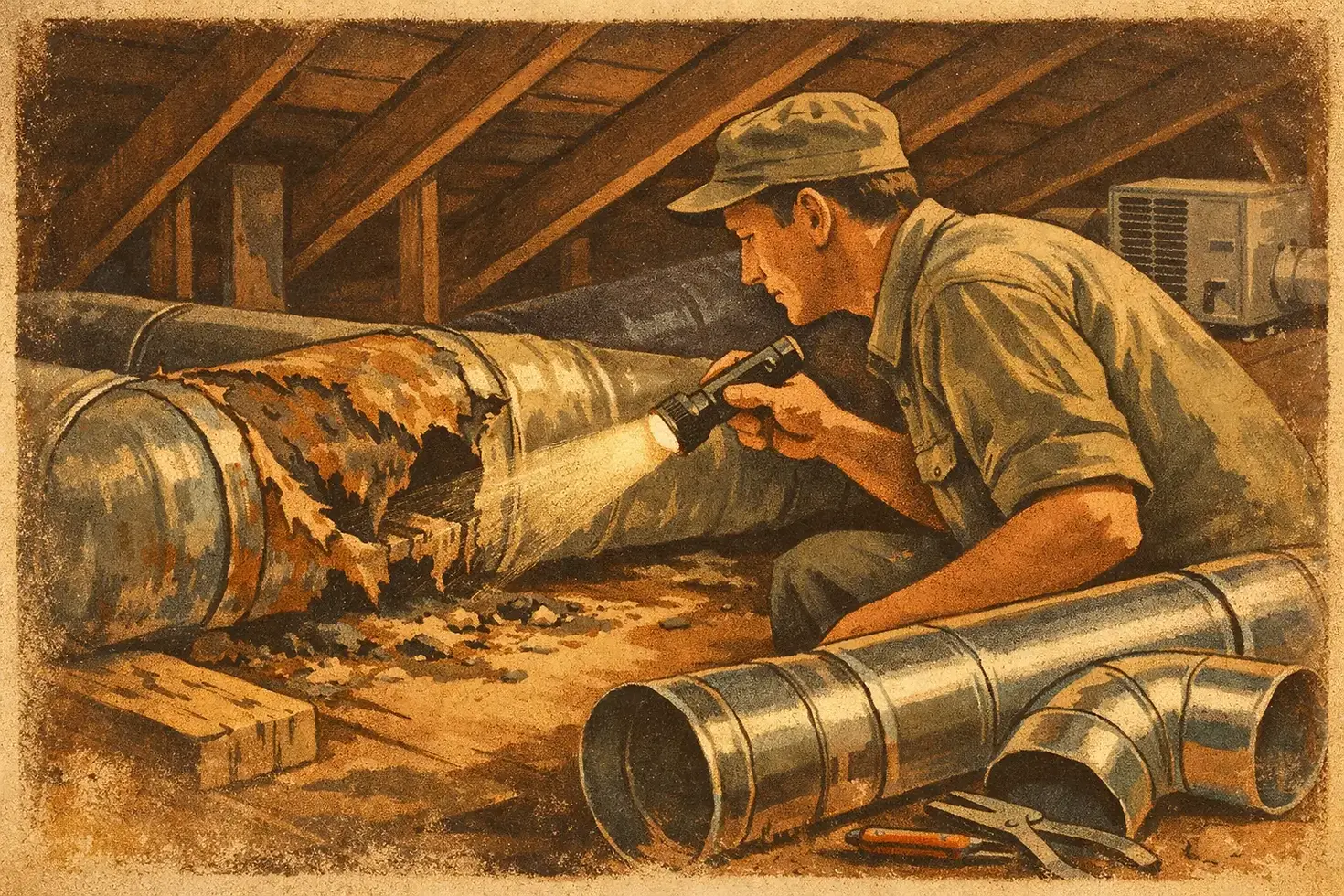
Visible damage is the clearest sign. Rust, corrosion, disconnected runs, crushed flex duct, torn insulation, and dark streaks around seams all point to air leakage or deterioration. If mold is present, that needs immediate attention. Sometimes the mold is on the duct exterior because of condensation. Sometimes it is tied to deeper moisture issues. Either way, replacing affected sections may be the safest option.
When ductwork replacement is usually the right call
There are a few situations where replacement is often the smarter and more cost-effective choice.
If the duct system is old and leaking in multiple places, constant repair becomes a bandage. You can keep fixing sections, but the overall performance still falls short. At some point, replacing the system gives you a cleaner installation, better airflow, and lower energy loss.
If you are replacing your HVAC equipment, that is also the time to look hard at the ducts. A new high-efficiency furnace, heat pump, or AC unit will not perform properly if the ductwork is undersized or full of leaks. Homeowners sometimes spend good money on new equipment and then wonder why comfort did not improve much. The problem was in the air distribution, not the unit itself.
Replacement is also worth considering after major home changes. Finished basements, additions, garage conversions, and open floor plan remodels often change how air should move through the home. Older ducts may no longer match the layout or load requirements.
For landlords and light commercial property owners, replacement may make sense when comfort complaints are ongoing across multiple areas. If tenants are calling about uneven temperatures, stale air, or high utility use, it may be more practical to correct the duct system once rather than continue with service calls that only address symptoms.
When repair is still a good option
Not every problem calls for a full replacement. That is where an honest inspection matters.
If the ductwork is structurally sound and the problem is limited to a few accessible leaks, damaged hangers, or one crushed run, repair can be the right answer. Sealing joints, reinsulating sections, reconnecting loose ducts, and improving support can restore performance without a full overhaul.
The same goes for homes with newer duct systems that were damaged by an isolated issue like a pest problem or a contractor stepping through an attic run. If most of the system is in good shape, targeted repair is usually enough.
This is why there is no one-size-fits-all rule for when should ductwork be replaced. The right decision comes down to overall condition, how widespread the damage is, and whether the current layout can support the heating and cooling system you have.
What a professional should check
A proper duct evaluation should go beyond a quick flashlight look in the attic. A contractor should check for leakage, insulation condition, airflow restrictions, poor routing, sizing issues, disconnected sections, and signs of moisture or contamination.
Airflow testing can be especially helpful if the home has hot and cold spots. It helps confirm whether the issue is duct-related or caused by equipment, thermostat placement, insulation gaps, or another problem. In some cases, the fix may involve zoning, balancing, or partial redesign rather than replacing every run.
That is one reason homeowners in Ocean County and nearby areas often benefit from working with a contractor who handles the full HVAC picture, not just equipment swaps. Ductwork, airflow, filtration, and system sizing all affect each other.
The cost question homeowners always ask
Most people asking about duct replacement are really asking whether it is worth the money. Fair question.
If your ducts are wasting a large percentage of conditioned air, replacement can improve comfort and reduce strain on the HVAC system. That does not mean every project pays for itself overnight. But in homes with major leakage or poor design, the improvement is usually noticeable right away in room temperatures, system run time, and overall comfort.
Repair may cost less upfront, but repeated repairs on failing ductwork can add up fast. If you are constantly chasing airflow problems, paying for high energy use, or dealing with dust and air quality complaints, replacement may be the more practical investment.
A good contractor should be clear about that trade-off. You want honest pricing, realistic expectations, and a recommendation based on the actual condition of the system, not a sales pitch.
A practical timeline for replacement decisions
If your ductwork is under 10 years old, replacement is less likely unless there was installation damage, bad design, or moisture exposure. Between 10 and 20 years, inspection becomes more important, especially if comfort issues are showing up. Once ducts pass the 20-year mark, replacement becomes more common, particularly in systems with flex duct, attic exposure, or a history of repairs.
Still, age alone should not make the decision. A well-installed duct system can last longer, and a poorly installed one can fail early. What matters is whether the ductwork is still delivering air efficiently, cleanly, and evenly.
ComfortCare Heat & Air sees this often with older homes and replacement system projects - the equipment is only part of the job. If the ductwork is failing, the home will feel it.
If your home has persistent hot and cold spots, unexplained dust, noisy airflow, or ducts that are visibly damaged, it is time to stop guessing and have the system inspected. The right answer may be a repair, a partial replacement, or a full redesign, but getting clear information now is a lot cheaper than letting bad ductwork drag down your comfort for another season.


Comments