


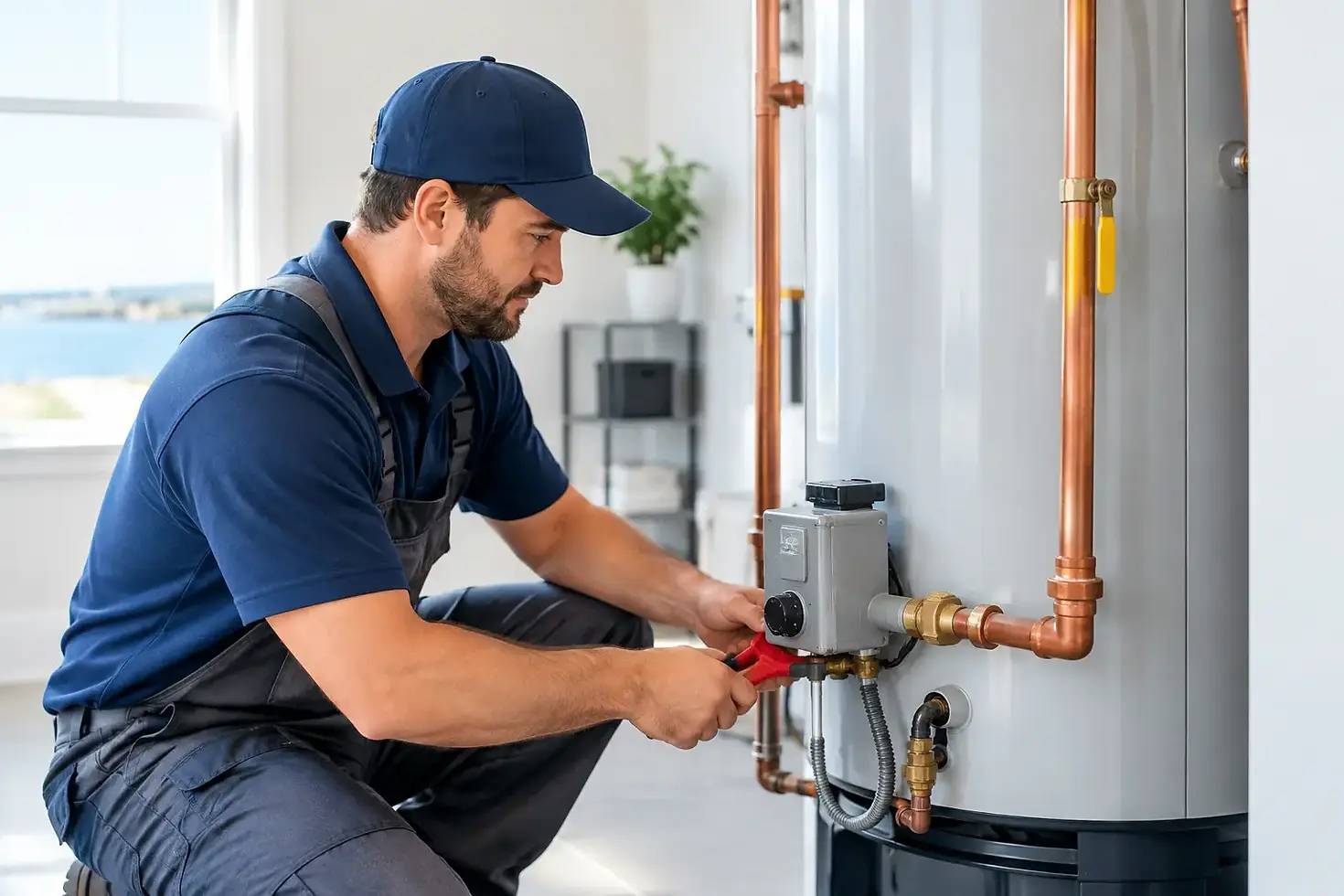
Water Heater Installation Done Right in Ocean County

A cold shower is usually the first sign that a water heater has reached the end of the line. Sometimes the warning comes earlier: rusty water, a puddle around the tank, rumbling noises, or a utility bill that keeps climbing. When replacement is the right call, professional water heater installation protects your home, your comfort, and your investment.
For homeowners and property managers in Ocean County, the goal is not simply getting a new unit in place. It is getting the right size, fuel type, venting, safety connections, and temperature settings for the building. A water heater that is installed correctly should deliver dependable hot water without creating gas, electrical, drainage, or code problems down the road.
When Water Heater Replacement Makes More Sense Than Repair
Many conventional tank water heaters last around eight to 12 years, although water quality, usage, maintenance, and installation conditions can shorten or extend that range. If the unit is leaking from the tank itself, replacement is generally the practical choice. A tank leak cannot be reliably repaired, and waiting can turn a small drip into water damage.
Not every problem means the heater is finished. A failed thermostat, heating element, pressure relief valve, thermocouple, or igniter may be repairable. But if repairs are becoming frequent and the unit is near the end of its expected service life, putting more money into an aging heater may not be the best value.
Warning signs worth taking seriously include discolored hot water, reduced hot-water capacity, popping or banging from sediment buildup, corrosion around fittings, and moisture at the base of the unit. A gas smell, active leak, or water heater that will not stay lit needs prompt professional attention. Do not try to work around gas or combustion issues.
Choosing the Right Water Heater for Your Property
The best replacement depends on how the property uses hot water. A family home with several bathrooms has different needs than a small office, restaurant prep area, rental property, or seasonal shore home. The cheapest unit on the day of installation is not always the lowest-cost choice over the life of the equipment.
Standard Tank Water Heaters
Traditional tank models store a set amount of heated water, commonly 40, 50, or more gallons. They are familiar, straightforward, and often the best fit when replacing an existing tank heater with a similar setup. Recovery rate matters as much as tank size. A properly sized gas unit can often replenish hot water faster than an electric model, but the right option depends on available utilities and household demand.
Tank water heaters are often a sensible choice for homes that need a dependable replacement quickly and have limited space for major changes. They also tend to have a lower upfront cost than tankless systems. The trade-off is standby energy use, since the unit keeps stored water hot even when nobody is using it.
Tankless Water Heaters
Tankless units heat water as it flows through the system. They can provide hot water for longer periods and free up floor space, which is useful in smaller mechanical rooms. They can also be an efficient choice for the right household or light commercial application.
However, tankless water heaters are not a one-size-fits-all upgrade. Proper sizing is critical because the unit must handle the incoming water temperature and the number of fixtures running at once. Installation may require changes to gas piping, electrical service, venting, condensate drainage, or water lines. Those details should be evaluated before choosing equipment, not discovered halfway through the job.
Fuel Type and Efficiency
Natural gas, propane, electric, and heat pump water heaters each have advantages. Gas units often provide strong recovery rates where gas service is available. Electric models can be practical where gas is not available or venting is difficult. Heat pump water heaters can offer excellent efficiency, but they need appropriate space, air volume, drainage, and operating conditions.
The right answer depends on the home, utility costs, installation location, and hot-water habits. A qualified contractor should ask how many people use the property, how many bathrooms are in service, whether large tubs are used, and if appliances such as dishwashers and washing machines run at the same time.
What Professional Water Heater Installation Includes
A safe water heater installation is more than disconnecting the old unit and connecting a new one. It starts with inspecting the location and confirming that the selected equipment fits the application. That includes checking clearances, fuel supply, venting, combustion air where applicable, electrical requirements, water piping, shutoff valves, and drainage.
For gas water heaters, correct venting and gas connections are essential. Improper venting can allow combustion gases to enter the building, while an undersized or poorly connected gas line can affect performance and safety. For electric units, the circuit, disconnect, wiring, and grounding must be suitable for the equipment.
The installer should also address the temperature and pressure relief valve, discharge piping, drain pan where needed, expansion tank requirements, and local code considerations. These are not optional extras. They are part of protecting the equipment and the people using the building.
Once the new unit is installed, it should be filled, checked for leaks, started correctly, and tested for proper operation. The final setup should include confirming hot water delivery and reviewing basic operation with the owner. If the old unit is being replaced, responsible removal and cleanup matter too.
Common Shortcuts That Cause Expensive Problems
Water heater work looks simple until something goes wrong. A loose fitting can create hidden water damage. A missing drain pan can turn a future leak into a damaged ceiling or floor. Incorrect venting can create a serious combustion risk. Setting the temperature too high can increase scalding risk, while setting it too low can leave the household short on hot water.
Another common mistake is replacing a unit with the same gallon size without considering the household's current needs. Maybe the family has grown, a bathroom was added, or the old water heater was never large enough. On the other hand, oversizing equipment can mean unnecessary upfront cost and energy use.
Permits and code requirements also deserve attention. Requirements can vary by municipality and installation type, especially when gas piping, venting, electrical work, or a change in equipment is involved. A professional installer handles the work with those requirements in mind rather than hoping an inspection issue does not surface later.
How to Prepare for a Water Heater Replacement
Before the appointment, clear a path to the water heater and remove stored items from the immediate area. If the unit is in a basement, utility closet, garage, crawlspace, or attic, access matters. Let the contractor know about low ceilings, tight stairs, parking limitations, pets, or any existing water damage.
It also helps to share what has changed in the property. Mention recent bathroom additions, frequent hot-water shortages, changes from oil to gas, plans for a tankless upgrade, or concerns about energy costs. Good information up front leads to a better recommendation and fewer surprises on installation day.
If you manage a rental or small business, consider scheduling replacement before a failing unit becomes an after-hours emergency. Planned work gives you more time to compare options, coordinate access, and choose equipment that fits the property instead of making a rushed decision under pressure.
Dependable Local Service When Hot Water Cannot Wait
For a new installation, a planned replacement, or an urgent water heater problem, experience matters. ComfortCare Heat & Air provides straightforward service for Ocean County, Tabernacle, and nearby New Jersey communities, with the hands-on knowledge to evaluate water heaters, gas piping, venting, and the mechanical details that support safe operation.
Ask questions before approving the work. You should understand what type of unit is recommended, why it fits your property, what installation changes may be needed, and what the estimate includes. Honest answers are part of a job done right.
A new water heater should bring relief, not another item to worry about. Choose equipment that fits your real hot-water needs, have it installed by a qualified professional, and address small warning signs before they become a flooded utility room or a morning without hot water.


Comments